

Volkswagen Taos Brake Replacement in Florence, SC
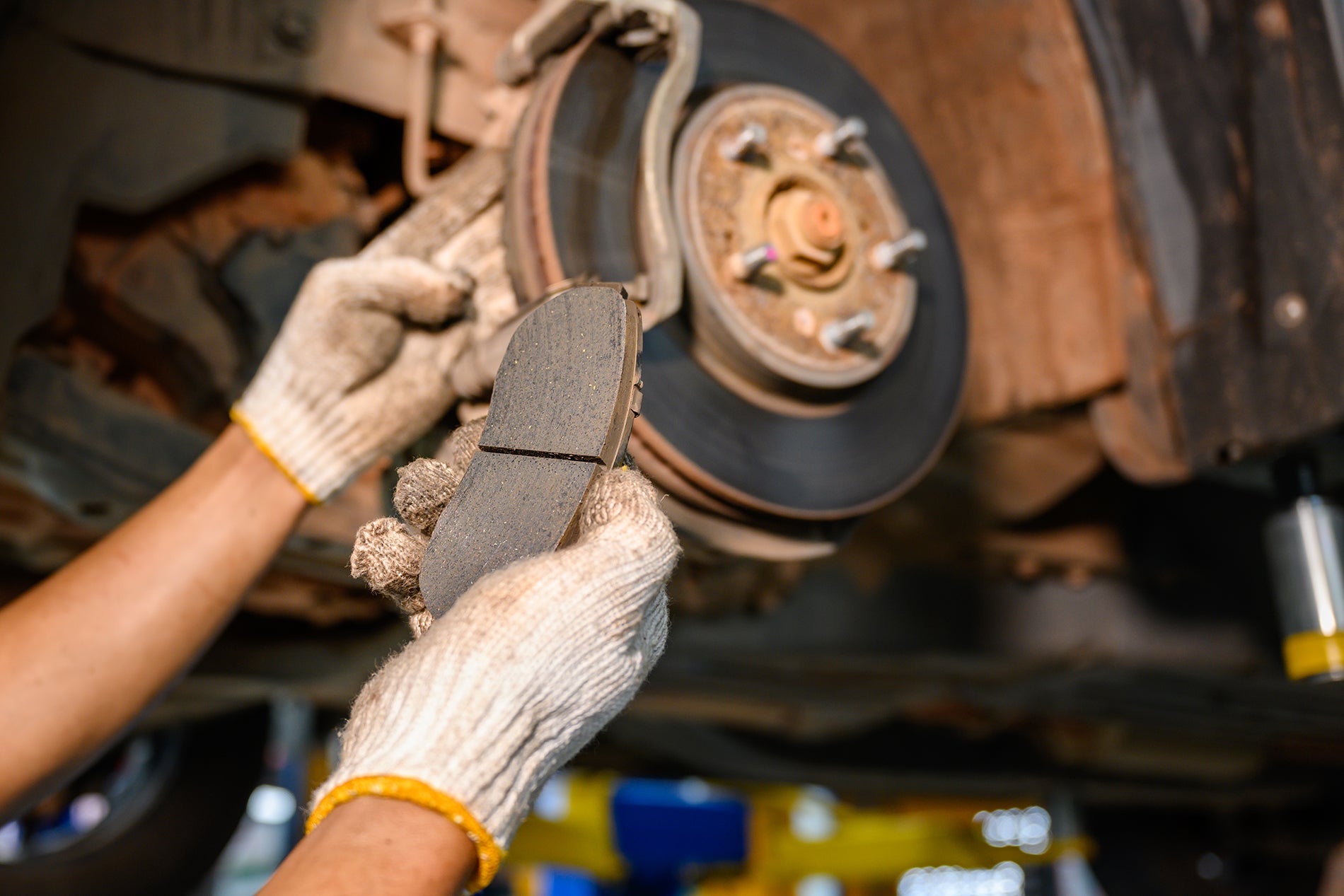
When your Taos hits the four- or five-year mark, the first major brake work is usually due. That typically means a front brake pad replacement, plus a brake fluid change, whether the pedal feels different or not.
Here, we’ll cover when to replace brake pads and rotors, how to read your inspection sheet, and which noises are worth a call versus which are normal.
At Mike Reichenbach Volkswagen of Florence, our factory-trained technicians service your Volkswagen Taos with genuine VW parts, whether you bought it from us or not.
Book your Taos brake service online and check our service and parts specials before you visit.
Your Taos Brake Timeline: What's Due and When
Your Taos's brakes wear out in two different ways. Brake pads and rotors wear down with miles, while brake fluid breaks down over time. Here's when you’ll usually encounter these on your Taos:
| Milestone | What's typically due | Why it matters |
|---|---|---|
| Every service visit | Pad and rotor measurement, fluid level and condition check | A quick measurement now tells you how many months or miles you have left. |
| 3 years from first registration | First brake fluid change | Volkswagen calls for it at 3 years regardless of mileage, then every 2 years after. |
| When an inspection shows front pads getting low | First front pad replacement, rotors measured for reuse | The front brakes handle most of the stopping on a front-heavy compact SUV. |
| 5 and 7 years | Repeat brake fluid changes | Fluid keeps absorbing moisture, which lowers its boiling point over time. |
| Second front pad change | Rear pads often due around this point; rotors more likely to need replacement | Rears wear slower, so they tend to come due every other front service. |
If you bought your Taos used, don't assume its brakes were serviced before you got it. Bring your paperwork or ask us to look up the service history, and we'll tell you what's due.
What's Actually on Your Taos
Every Taos, whether it’s front-wheel drive or 4MOTION® all-wheel drive, uses disc brakes at all four corners with an electronic parking brake at the rear. Before we set up your brake pad replacement or order parts, we consider the following:
- Drivetrain: FWD and 4MOTION Taos models have different rear suspension designs, so we match parts to your VIN, not just your model.
- Electronic parking brake: The rear calipers must be put into service mode with a scan tool before the pads can come out, then recalibrated afterward.
- Auto Hold: If you use Auto Hold at stoplights, your Taos holds itself with the brakes and hands off to the electronic parking brake on longer stops. It doesn't add meaningful pad wear, but it's one more reason we confirm the whole system works correctly before you leave.

Is It a Brake Problem, or Just Brakes Being Brakes?
It’s not unusual for drivers to call us about an issue that turns out to be completely normal, and sometimes ignore the ones that aren't. Here's how to tell the difference on your Taos.
Normal, No Need to Worry:
- A light scraping sound on the first few stops after rain or a car wash. Bare rotors pick up a thin film of surface rust overnight in our humidity. The pads wipe it off within a few stops.
- Orange-brown rotors after your vehicle sits for a few days. Same cause, same fix: drive it, and the braking surface cleans itself up.
- A brief click or hum from the rear brakes when you park or pull away. That's the electronic parking brake motor engaging and releasing.
- A firm pedal when Auto Hold is active. The system is holding pressure for you, so the pedal may feel different at a stop.
Worth a Call This Week:
- A high-pitched squeal every time you brake, not just the first one of the morning.
- The brake pedal feels softer or goes down farther than it used to.
- A brake pad wear message or brake warning on your digital cockpit display.
- A vibration in the steering wheel when slowing from highway speed.
- Rust that doesn't clear up after a day of normal driving, which may mean you have a sticking caliper.
Stop Driving and Call Us:
- Grinding or metal-on-metal scraping that doesn't go away.
- A pedal that sinks toward the floor.
- Your vehicle pulling hard to one side when you brake.
- A red brake warning paired with any change in how the pedal feels.
If you’re still not sure, call us at 843-292-4200 and describe what you’re seeing and hearing. We’re happy to help you determine how serious the problem is.
How a Taos Gets Driven Around Florence, and What That Means for Its Brakes
The Taos is perfect for everyday driving, whether that’s short trips across town, a daily commute, or a beach weekend when the calendar allows. Each of those wears your brakes a little differently.
- Short in-town trips. From your commute to errands across town, you can make a lot of stops without covering many miles. Front pads do most of that work, which is why in-town Taos owners usually need to replace their pads sooner than highway commuters.
- Days parked, then driven. If your Taos sits during the week while you carpool or work from home, moisture has more time to settle on the rotors and caliper hardware. Regular driving keeps everything moving freely, and an inspection catches slide pins that are starting to stick.
- Coastal weekends. A trip down US-501 to Myrtle Beach brings salt air and sand along for the ride. Neither one wears pads on its own, but both can speed up corrosion on rotor edges and caliper hardware. Rinsing the wheels after a beach trip helps prevent that salt and sand from building up, which slows corrosion.
- Summer heat and humidity. Brake fluid soaks up moisture from the air over time, and the humid Pee Dee region gives it plenty to absorb. That's why Volkswagen sets fluid changes by time, not mileage.
How to Read Your Taos Brake Inspection
When we inspect your brakes, you get measurements, not a guess. If you've never seen a brake report before, the numbers can seem confusing. Here's the translation:
Brake Pad Thickness
We measure the friction material left on each pad, front and rear, and compare it with Volkswagen's specification for your Taos. Here’s how we grade them:
| Zone | What it means | What we'll recommend |
|---|---|---|
| Green | Plenty of pad life left | Nothing now; we'll measure next visit again. |
| Yellow | Wearing toward the replacement point | Plan for pads in the coming months, especially if you drive mostly in town. |
| Red | At or near Volkswagen's minimum | Replace the pads ASAP before wear reaches the rotors. |
Rotor Condition
Every rotor has a minimum thickness stamped on it by the manufacturer. We measure yours against that number and check for grooves, uneven wear, and runout (a slight wobble that causes vibration). If your rotors are within spec and smooth, they’re fine. If they're too thin, deeply scored, or causing vibration, we’ll do a full brake and rotor replacement.
Brake Fluid
We check your brake fluid level and condition, and compare your Taos's age against Volkswagen's schedule. If a fluid change is due, we'll let you know.
Volkswagen Taos Brake FAQ
Both use four-wheel disc brakes with an electronic parking brake. But the rear suspension differs between the two, so we confirm parts by VIN to be sure everything fits your exact vehicle.
Pads and rotors are wear items, and normal wear typically isn't covered under the new-vehicle warranty. A defect in a brake component is typically covered, though. If something seems off, bring it in, and we'll check your coverage.
That's surface rust on the rotors from overnight moisture, not a sign of wear. It wipes off within a few stops and isn't anything to worry about. If the noise continues after you've been driving a while, give us a call.
Check your service records, or give us your VIN and we can look up service that was performed at Volkswagen dealers. If there's no record, we can test the fluid during an inspection.
No. Auto Hold holds the vehicle while it's already stopped, so it doesn't create the friction wear that slowing down does.
Often, yes. If your rotors are above minimum thickness and the surface is smooth, they can stay. We'll show you the measurement either way.
A front or rear pad replacement is typically a short appointment, and adding rotors or a fluid change adds a little time. When you schedule, we'll give you an estimate so you can decide whether to drop off your vehicle or wait.
Book Your Taos Brake Service in Florence
No matter how old your Taos is or what symptoms you’re experiencing, a quick inspection at our VW Service Center will let you know where you stand.
Schedule online, contact us with questions, or get directions to 611 N Coit Street. And if a warning light other than your brakes is on, see our guide to Volkswagen Taos check engine light service.
We proudly provide excellent Volkswagen service to Taos owners in Florence, Darlington, Hartsville, Lake City, Marion, Sumter, and across the Pee Dee region.
Disclaimers
- Brake service recommendations are based on inspection of your specific vehicle. Pad thickness, rotor specifications, and parts vary by Taos model year, drivetrain, and trim. Actual service needs are determined at the time of inspection.
- Wear guidance and driving-condition notes on this page are general guidance only and are not a warranty or guarantee of service intervals.
- Brake fluid intervals are based on Volkswagen's published maintenance schedule. Refer to your owner's manual or Digital Maintenance Booklet for your vehicle's requirements.
- Warranty coverage varies by vehicle and is subject to the terms of your Volkswagen New Vehicle Limited Warranty. See dealer for details.
- Service and parts specials are subject to change and may not be combined with other offers. See dealer for current details and eligibility.