

Volkswagen Tiguan Check Engine Light
Volkswagen Tiguan Check Engine Light
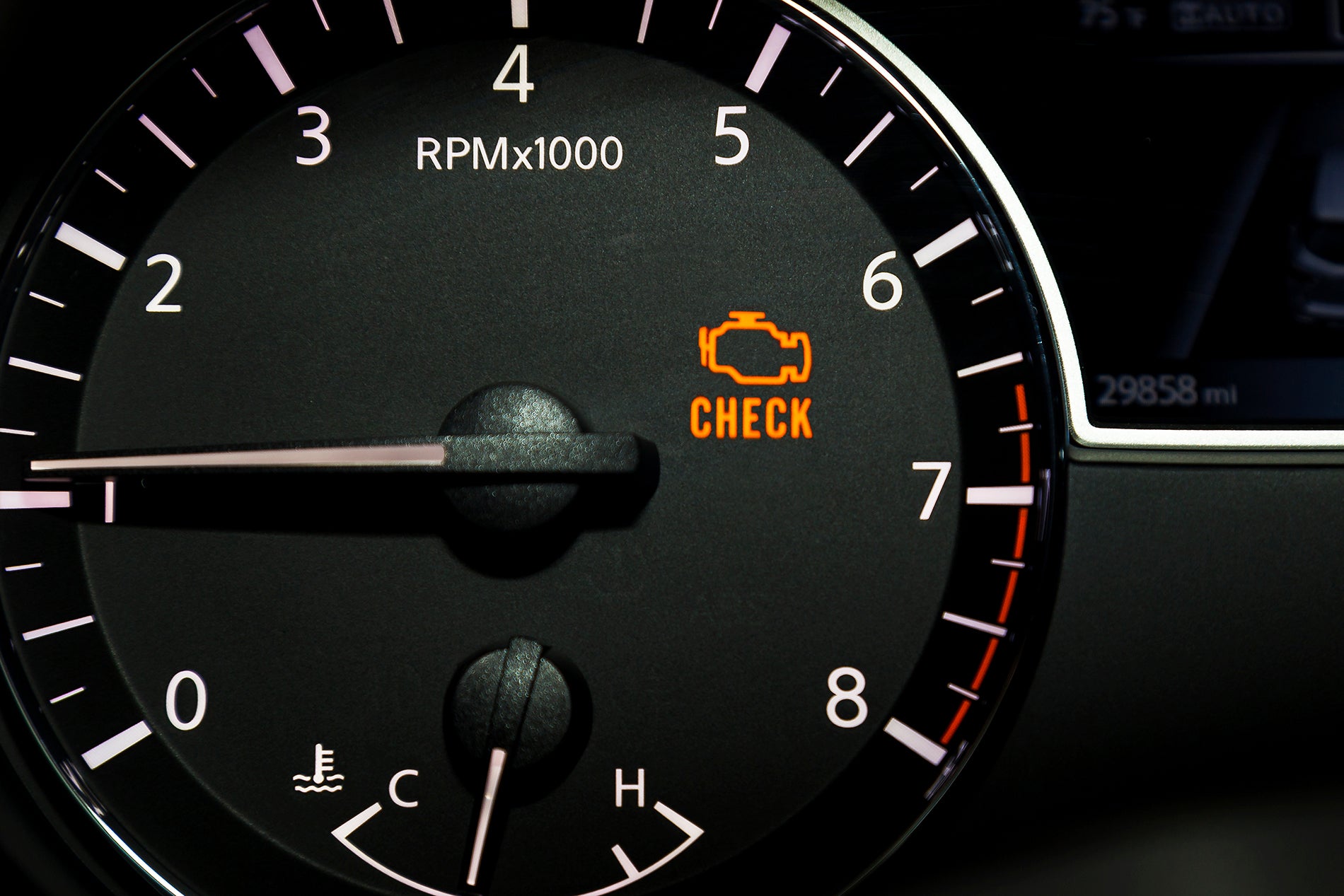
When your Volkswagen Tiguan's dashboard lights up, don't panic. While it could be serious, it might be as simple as a loose gas cap.
In our comprehensive guide, we'll help you understand your Volkswagen's check engine light, why it may be lighting up your dashboard, and when to look for a Volkswagen service center near you!
What Does Your Check Engine Light Mean in a Volkswagen Tiguan?
Your Volkswagen Tiguan's check engine light is one of the most important warning indicators on your dashboard. When it turns on, it means your vehicle's onboard systems have detected an issue under the hood that needs attention. While it may be a minor issue, it can also signal something more serious affecting engine performance, emissions, or drivability.
Modern Volkswagen vehicles use an advanced onboard diagnostics system (OBD-II) that constantly monitors engine components, sensors, and emissions equipment. When something isn't operating within factory specifications, the system triggers a warning light on your dashboard.
The check engine light, sometimes shown as an engine-shaped icon or the words "Check Engine", can appear in different ways on your Tiguan:
- A solid light usually indicates an issue that should be inspected soon, but there is no need to stop driving immediately.
- A blinking service engine light, however, often means the engine is misfiring or experiencing something that could cause damage. Your vehicle should be diagnosed as soon as possible to avoid major issues and expensive repairs.
Common Reasons the Check Engine Light Comes On in a Volkswagen Tiguan
When the check engine light turns on in your Volkswagen Tiguan, the onboard diagnostics system has detected a fault in the engine, emissions system, or fuel management system. Below are some of the most common causes seen on Tiguan models, including recent model years equipped with turbocharged TSI engines.
A loose, cracked, or improperly sealed gas cap is one of the simplest reasons the check engine light may come on. The Tiguan's EVAP system monitors fuel vapor pressure, and even a small leak can trigger a fault code.
Solution: Make sure the gas cap is tightened until it clicks. If the seal is worn or damaged, replacing the cap usually resolves the issue after a few drive cycles.
Your Tiguan uses oxygen sensors to monitor exhaust gases and adjust the air-fuel mixture. A failing sensor can reduce fuel economy, increase emissions, and cause rough performance.
Solution: Replace the faulty oxygen sensor.
The catalytic converter reduces the emissions from your Tiguan's exhaust. If it becomes clogged or fails, the check engine light may appear along with reduced power, poor acceleration, or a sulfur-like smell.
Solution: A failing catalytic converter usually needs to be replaced. The underlying cause, such as engine misfires, should also be corrected.
The mass airflow sensor measures the amount of air entering the turbocharged engine so the engine computer can deliver the correct amount of fuel. When the sensor gets dirty or fails, you may notice hesitation, stalling, or poor fuel economy.
Solution: Clean or replace the MAF sensor to restore normal performance.
Volkswagen Tiguan engines require properly functioning spark plugs and ignition coils to run smoothly. Worn plugs or failing coils can cause engine misfires, slipping, rough idling, and sometimes a flashing check engine light.
Solution: Spark plugs should be replaced at the recommended service intervals listed in your owner's manual. Replace faulty ignition coils as soon as possible to help prevent catalytic converter damage.
The Tiguan's vacuum and EVAP systems help control emissions and engine operation. A cracked hose, loose connection, or faulty purge valve can trigger the check engine light.
Solution: A diagnostic scan can identify the leak, and replacing worn hoses or valves usually corrects the problem.
Modern Volkswagen vehicles rely on numerous sensors and control modules. Low battery voltage, wiring issues, or a failing sensor can sometimes trigger the check engine light, even when the engine appears to be running fine.
Solution: Test the battery, alternator, and electronic systems to identify the cause of the warning.

Breaking Down Volkswagen Tiguan Check Engine Light Codes
The first step in diagnosing a check engine light on a Volkswagen Tiguan is to run a diagnostic scan with an OBD-II (On-Board Diagnostics) scanner. This tool reads diagnostic trouble codes (DTCs) stored in the vehicle's computer and helps identify the system causing the warning light.
Modern Tiguan models use advanced engine management and emissions monitoring systems, so the correct code is the fastest way to determine whether the issue is minor or requires immediate service.
Below are some of the most common OBD-II codes seen on Volkswagen Tiguan models and what they typically mean:
| Code | Name | Description |
|---|---|---|
| P0300 | Random/ Multiple Cylinder Misfire Detected | Indicates an engine misfire in one or more cylinders |
| P0420 | Catalyst System Efficiency Below Threshold | Issue with the catalytic converter |
| P0171 | System Too Lean Bank 1 | The engine is running with too much air and not enough fuel, which may be caused by a vacuum leak, a faulty sensor, or a fuel system issue. |
| P0455 | Evaporative Emission Control System Large Leak Detected | The fuel cap is possibly loose, or there is a larger issue with the Volkswagen's emissions system |
| P0299 | Turbo / Supercharger Underboost | Indicates the turbocharger is not producing the expected boost pressure. This can be caused by leaks in the intake system, a faulty wastegate, boost sensor issues, or turbocharger problems. |
| P0440 | Evaporative Emission Control System Malfunction | Indicates an issue with the system that captures fuel vapors to prevent them from being released into the atmosphere. |
| P0456 | Evaporative Emission System Leak Detected (Small Leak) | Could be a minor fuel-system leak, often related to the gas cap. |
How to Reset the Service Engine Light on a Volkswagen Tiguan
If the problem that triggered the check engine light on your Volkswagen Tiguan has been repaired, the warning light may need to be cleared from the vehicle's computer. In many cases, the light will turn off automatically, but the following methods are commonly used on Volkswagen models.
- Use an OBD-II or Volkswagen-Compatible Scan Tool — A diagnostic scanner is the most accurate way to reset the check engine light. Plug the tool into the Tiguan's OBD-II port under the dashboard and clear the stored fault codes. A professional or VW-compatible scan tool is often the most reliable option.
- Allow the Vehicle to Complete Drive Cycles — After the repair is completed, the check engine light may turn off on its own after several normal driving cycles. The Tiguan's onboard diagnostics system continuously checks engine and emissions performance, and if the fault is no longer detected, the light will reset automatically.
- Check the Fuel Cap and EVAP System First — On Volkswagen Tiguan models, a loose fuel cap or small EVAP system leak is a common cause of the check engine light. Tightening the gas cap and driving the vehicle for several trips may allow the system to reset if no other problems are present.
- Disconnecting the Battery May Reset Some Faults — Removing the negative battery cable for several minutes can reset some warning lights, but this method isn't always recommended for Volkswagen vehicles. Disconnecting power may reset learned settings and may not clear manufacturer-specific codes stored in the control modules.
- Have the Tiguan Diagnosed by a Volkswagen Technician — If the check engine light stays on, comes back, or starts flashing, the vehicle should be inspected with professional diagnostic equipment. Volkswagen models use multiple control modules, and clearing the light without addressing the underlying cause can lead to performance issues or additional repairs.
Schedule Volkswagen Tiguan Service at Mike Reichenbach Volkswagen Today
When your Volkswagen Tiguan's check engine light comes on, having the vehicle inspected by trained professionals is the best way to make sure the problem is diagnosed correctly and repaired the right way. Our service team knows Volkswagen models inside and out. With advanced diagnostic equipment, they're able to identify engine, turbocharger, and emissions system faults quickly and accurately.
From routine maintenance like oil changes, spark plug replacement, and filter service to more complex engine and warning-light diagnostics, our technicians can help keep your Tiguan running at its best. Using quality parts and proper repair procedures helps maintain performance, efficiency, and long-term reliability.
If your service engine light is on or your Tiguan is due for maintenance, schedule your Volkswagen service appointment online or stop by our service center today. Our team is here to help keep your Volkswagen ready for the road ahead!